

Quick Reference
The fundamental flaw in waiting until after a crisis to figure out what went wrong screams at us. Something has already gone wrong.
Executive culture conditions us to rely on the post-mortem. Whether you face a failed initiative, an operational disaster, or a fractured governance dispute, the standard playbook dictates that you gather the team in a room, pull up a polished PowerPoint, and conduct an autopsy. But the standard post-mortem sets a trap. Survivor bias deeply infects it.
When we look back at an emergency that was not entirely fatal to the organization, we naturally paint the response in a favorable light. This creates a dangerous illusion.
When we look back at an emergency or a project that was not entirely fatal to the organization, we naturally paint the response in a favorable light. We tell ourselves we did things mostly the right way and note a few minor tweaks for next time. This creates a dangerous illusion. It ignores the blind spots, the unknown unknowns, and the systemic vulnerabilities that we should have addressed before the crisis ever arrived.
If you want to build an organization that does not just survive crises but actively outmaneuvers them, you must stop conducting perfunctory autopsies. You need to build anticipatory muscle memory.
The Illusion of Survivor Bias
Imagine a standard HR disaster. You hire a problematic employee, their performance sours, you initiate an exit, and suddenly a massive lawsuit lands on your desk. Your legal team, your insurance carrier, and your HR director gather for a post-mortem. They conclude that you gave the employee good reviews in the past. When you finally separated from them, the employee used those four years of glowing reviews against you. The post-mortem merely tells you why you are currently writing a million-dollar settlement check.

This is an example of how working a pre-mortem effectively mitigated the most stressful aspects of the beginning of the COVID-19 pandemic for a small city. Keep reading for the “When the Water Rises” lesson to learn more.
If you take a Murphy’s Law approach, where anything that can happen will happen, you scrutinize your current performance review process before the employee ever fails. You identify the failure points and legally compromising habits before they become liabilities. When your team sanitizes a failing project or a massive operational pothole into a nice green checkmark on a polished PowerPoint, you lose the context you need to manage the system.
Defining Anticipatory Muscle Memory
Anticipatory muscle memory allows you to see two or three steps ahead of an impending problem.
Most leaders believe that executive power means saying "yes" to new initiatives. True executive authority gives you the freedom to say "no" to things desperation would otherwise force you to accept. When you develop this anticipatory muscle, you discern which paths lead to a sub-optimal outcome. You anticipate the inevitability of events such as a new grant, a major acquisition, a natural disaster, or a funding shift.
Once you know an event approaches, you map out exactly how your organization will fail its way into that occurrence. When your culture ingrains this muscle memory, your team stops looking backward at how they avoided failure in the past. Instead, they look forward to preventing future failures.
Engineering Failure on Purpose
The Pre-Mortem provides the antidote to the post-mortem trap. While I teach the granular, step-by-step mechanics of running this exercise within our private advisory forums, every executive must grasp the core philosophy immediately. You must learn to engineer failure on a quiet Tuesday.
You do not ask your team if it will fail; you tell them it has failed. Declaring the failure as a reality removes ego from the equation.
A Pre-Mortem requires you to look at an upcoming quarter, assume your biggest project or impending challenge has catastrophically failed, and work backward. You do not ask your team if it will fail. You tell them it has failed.
Assuming failure right out of the gate shifts human nature. If you merely ask for a risk assessment, your staff naturally tries to package and sanitize bad news to protect themselves and please you. They throw generic, corporate filler language at you to soften the blow. But declaring the failure as a reality removes ego from the equation. Suddenly, your directors speak from their own zones of genius. Finance explains how the credit dried up. Operations explains how the supply chain broke.
People show remarkable creativity when figuring out how a system broke. They expose the soft underbelly of their own departments in ways they never attempt during a standard strategic planning meeting. You demand the unfiltered truth. Over time, this demand strips away the buzzwords and develops a cultural shorthand that remains blunt, honest, and highly efficient.
When the Water Rises: The Natural Disaster
Anticipatory muscle memory offers cross-functional beauty. You use the exact same executive muscles to navigate a natural disaster, survive a toxic governance dispute, or overcome a sudden operational failure.
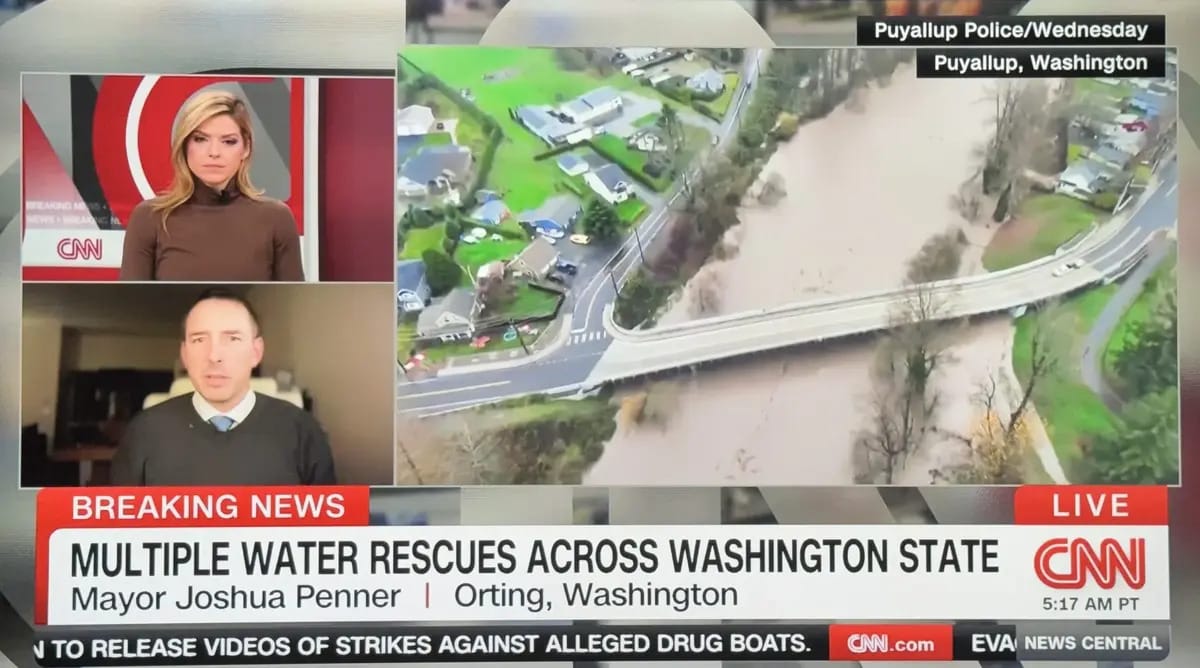
During my tenure as Mayor of Orting, we systematically built this anticipatory muscle. We did not just passively receive emergency response plans. My job as the executive required me to actively pierce those plans and look for the failure points before the water ever rose.

Orting EOC, augmented by relationships built in advance with various other agencies. By planning to fail, we became the focal point of success in a historic flooding event.
In January 2020, long before the World Health Organization declared COVID-19 a global disaster and while public health officials still downplayed the threat, my city clerk pointed out rising flu-like cases. Utilizing our anticipatory framework, we compared regional hospital bed capacity to historical flu trends. The math terrified us because the beds simply could not accommodate a large-scale outbreak.
The very next day, we held a tabletop exercise. We assumed a catastrophic virus. We assumed tens of thousands of cases required hospitalization in our region. We assumed people died, residents raged, and food and water supplies vanished. We looked at the board and asked what we did wrong to get here.
Assuming the worst, we immediately identified our critical vulnerabilities. While the rest of the world waited to see what would happen, we worked backward from failure. We produced tangible results. We secured water purification systems, procured tens of thousands of meals, and stockpiled PPE for our police officers well before the global shortage hit. We even quietly secured a refrigerated truck and staged it at our wastewater treatment plant to serve as a makeshift morgue. We anticipated the fundamental public safety breakdown that occurs when families cannot care for their deceased.
Engineering the failure on a whiteboard in January prevented us from flying blind. We executed a plan born from anticipatory clarity.
When the Boardroom Floods: The Political Disaster
You translate that exact same methodology directly to a political or organizational crisis. Toward the end of my tenure, we faced a significant City Council revolt. The mechanics of surviving the revolt mirrored the mechanics of surviving the pandemic perfectly.
A political disaster, an HR scandal, or a loss of major funding acts fundamentally like a flood.
A political disaster, an HR scandal, or a loss of major funding acts fundamentally like a flood. Given enough time and enough variables, friction occurs. If you serve as a non-profit CEO answering to a volunteer board or a City Manager dealing with an activist council, you anticipate the gridlock.
Running an anticipatory exercise on a political failure prompts you to start vote-counting early. You anticipate the exact objections your board plans to throw at you. You identify the critical communication breakdowns that trigger a vote of no confidence. Casting forward into that failure gives you the leverage to disrupt the political theater before it paralyzes your agency. You learn when to build alignment and when you must take a bold, courageous step in the opposite direction of the room.
Beware the "SPOTS": The True Artifact is Culture
When executives hear about this process, they immediately ask for the meeting's physical artifact. They want an Excel spreadsheet, a Gantt chart, or a new binder.
A good friend of mine, a former Deputy Mayor, refers to standard strategic plans as "SPOTS," meaning Strategic Plans On The Shelf. This creates the worst-case scenario for an executive. You spend $100,000 on a consultant to build a matrix of tasks that no one culturally buys into. A strategic plan providing a checklist without shifting the organizational mindset proves less than useless. It actively drains your resources.
Anticipating failure certainly generates task lists like ours to procure PPE or secure lines of credit. But the true artifact of this work resides in the movement on culture. The real prize produces a team that naturally looks ahead and makes anticipatory risk management their daily way of doing business.
The Ego and the Martyr: Overcoming Resistance
Introducing this framework to leaders consistently triggers two distinct types of resistance.
First, we meet the non-profit "Martyr Founder." In the non-profit sector, a singular, highly passionate founder frequently drives the organization and carries the entire operational weight. They resist looking at catastrophic failure because they feel they already figured everything out. The exercise feels like a distraction that fails to immediately remove items from their plate. But well-meaning boards and passionate teams fall short. To scale an organization beyond a martyr founder into a high-functioning governance body, leadership must institutionalize this anticipatory thinking.
Second, we encounter the ego-driven executive. In the municipal and corporate sectors, City Managers and CEOs often push back. They claim they already practice this concept and focus heavily on their post-mortems to change future behavior. I respond to them bluntly. A post-mortem shines the brightest light on the things you view with the most pride. Anticipating failure shines a light equally on all potentials for ruin.
Practicing this properly prevents the constant surprise of crises hitting your desk. It stops you from micromanaging a failing project simply because you react to sanitized information. Right now, you fly blind because you failed to build an organizational culture of anticipation.
Stop waiting for the disaster to reveal your weaknesses. Look at your calendar for next Tuesday, gather your directors, and assume you have already failed. Only then do you build the scaffold that ensures you never actually do.
Stop Guessing. Start Engineering Your Scaffold
You now understand the fatal flaw of the post-mortem. You know that survivor bias is a trap and that waiting for the disaster is a choice to fly blind. Knowing the philosophy is the start; execution is the barrier.
I have developed two ways to help you move from theory to operational resilience immediately:
Option 1: The Do-It-Yourself Kit
Review the excerpt below from our Resilience Scaffold Strategic Playbook. A tangible, useful, and transformative approach to working with your team and building your culture of proactive leadership.
This is an excerpt from
The Resilience Scaffold: Strategic Playbook
Part 1: Rules of Engagement
You must establish strict boundaries before the meeting begins. If you fail to control the environment, human nature will take over, and the exercise will devolve into a defensive posturing session.
If you fail to control the environment, human nature will take over, and the exercise will devolve into a defensive posturing session.
Restrict the Room: Limit attendance strictly to your C-Suite or your direct department directors. Do not invite frontline staff to this initial meeting. If you bring the entire agency, you become the single point of failure. You must teach your directors this framework first so they can drive the culture down into their own respective teams later.
Check Egos at the Door: You must explicitly state that failure has already occurred. No one is allowed to defend their current systems. If a director attempts to explain how their current plan prevents failure, cut them off. Remind them that their plan failed.
Ban Filler Language: Forbid corporate buzzwords completely. If a director claims the failure resulted from "bandwidth constraints," force them to say "we ran out of staff." Strip away the polished vocabulary to expose the actual operational realities.
Part 2: The 45 Minute Agenda

Keep the Pre-Mortem tight. If you let it drag, the energy dies, and the room succumbs to fatigue. Use this strict 45-minute timeline to bypass filler and extract actionable data.
Minutes 0 to 5: Declaration of Failure. The executive takes the floor and sets the stage. Announce the specific scenario you are testing. State clearly and without hesitation that the organization has failed completely. Look your team in the eye and take the blame. Tell them, "I am the executive. I failed. We are now looking backward to figure out why."
Minutes 5 to 20: Autopsy of the Future. Go around the room. Force your directors to speak from their specific zones of genius. Write every point of failure on the whiteboard. Do not try to solve anything yet. Your only goal right now is to list the exact causes of death. Let them expose the soft underbelly of their departments.
Minutes 20 to 35: Pivot to Engineering. Shift the energy in the room immediately. You just spent fifteen minutes looking at a thousand ways the organization can die. Now, pivot to survival. Look at the board and ask the team how to engineer a way out of these specific failures. Identify the two or three most critical vulnerabilities on the whiteboard and brainstorm the structural scaffolds needed to prevent them.
Minutes 35 to 45: Task Delegation and Closure. Assign concrete tasks to mitigate the top vulnerabilities you just identified. Establish strict deadlines for these deliverables. Close the meeting using the Saved Rounds protocol to ensure no one leaves paralyzed by anxiety.
If you’re liking the Cliff’s Notes version so far - the full Playbook is 30+ pages of how-to guides, templates, and scripts you need to use to effectively deploy the pre-mortem approach with your leadership teams today.
Part 3: Your Departmental Prompt Matrix

When you pivot to the Autopsy of the Future, some directors will freeze. They will struggle to envision their own failure. Use these tailored, aggressive prompts to pierce their defenses and force them to engage.
Finance: "We are completely bankrupt and cannot make payroll next month. What specific funding source collapsed, and why did we fail to secure a backup line of credit in time?"
Operations & Public Works: "The supply chain snapped. Our core service delivery halted completely. What single point of failure in our logistics network caused this, and why did we ignore the warning signs?"
Human Resources: "Our top three performers just quit on the exact same day and cited a toxic culture as their reason. What specific policies, unwritten rules, or leadership failures drove them out the door?"
Legal & Risk Management: "We just lost a multi-million dollar lawsuit that threatens our operating charter. What specific compliance gap or ignored safety protocol handed the plaintiff their victory?"
Communications & Public Affairs: "The public and our key stakeholders completely lost trust in us over a massive scandal. What critical information did we try to hide, and how did it leak to the press?"
Part 4: The "Saved Rounds" Protocol
You cannot let the meeting end on a note of anxiety. As easily as a clever team can invent a thousand ways to fail, they find it profoundly motivational to build the solutions. You must ensure they leave the room with a sense of absolute control.
The "Saved Rounds" protocol acts as your final pressure release valve. It is a military phrase I use to close out hard meetings.
As everyone packs up their notes, stop them and ask the room: "Are there any saved rounds?"
As easily as a clever team can invent a thousand ways to fail, they find it profoundly motivational to build the solutions.
This gives every director one final, safe opportunity to raise a critical issue they held back during the intense session. It provides a final psychological safety net for the unfiltered truth.
If a director fires off a saved round, acknowledge it, assign a follow-up action, and thank them for their candor. If the room stays quiet, you close by summarizing the concrete wins you mapped out on the board. Remind the team that they just successfully predicted the future and built the exact tools needed to defeat it. They leave the room armed, aligned, and ready to execute.
Part 5: Your Wednesday Morning Accountability Loop

You may see a similarity to an OODA loop in this imagery. Both anticipatory strategy, such as in this article, and rapid iteration once engaged (what OODA gives you), are critical and necessary approaches. You might think of OODA helping you dance through a flood, and this framework helping you build the levee before the first cloud.
The Pre-Mortem meeting ends on Tuesday afternoon. Wednesday morning determines whether you successfully built anticipatory muscle memory or just generated another useless Strategic Plan On The Shelf. You must operationalize the task list immediately.
Assign Singular Ownership: Shared responsibility means zero responsibility. Every failure vulnerability identified on the whiteboard must receive exactly one executive owner. If the supply chain represents the highest risk, the Operations Director owns the solution completely.
The 14 Day Check-In: Do not let the mitigations die in the daily operational grind. Schedule a strict, 15-minute follow-up briefing exactly two weeks after the Pre-Mortem. The only agenda item is reporting on the structural scaffolds assigned during the exercise.
Integrate into the Budget: A solution without funding is simply a wish. If your Pre-Mortem reveals that you need to secure a secondary water source or retain external legal counsel, you must inject that requirement directly into the upcoming quarterly budget review.
Part 6: The Executive Cadence

You cannot run a full Pre-Mortem every week. If you deploy this tool too frequently, you will exhaust your directors and dilute the psychological impact of the exercise. You must deploy it strategically.
The Quarterly Operational Check: Run a broad, generalized Pre-Mortem once a quarter. Assume the organization as a whole fails within the next ninety days. This keeps the anticipatory muscle conditioned and forces directors to look up from their daily silos.
The Project-Specific Strike: Run a highly targeted Pre-Mortem thirty days before you launch any major capital project, initiate a high-stakes policy change, or engage in a complex union negotiation. Focus the entire 45-minute agenda strictly on the failure of that singular initiative.
The Crisis Transition: When a real crisis finally hits, run a rapid Pre-Mortem on the recovery effort itself. Assume your immediate response strategy fails catastrophically within the next week. This prevents the executive team from getting tunnel vision during an active emergency.
Option 2: Work with an Experienced Coach
Direct support from someone who’s been in the trenches and worked the problems in real time - with the scar tissue to prove it. Book time with me to develop your executive leadership skills and start working the problems that hold you back.

Was this article helpful for you in your role?
Attn: Non-Profit CEOs, Mayors, City Managers & Administrators, Senior Department Directors
Leadership isolation is a real operational threat.
That’s why I’ve created strictly confidential, closed-door Executive Forums for senior leaders.
We have a strict cap of eight seats in each. I’d love to have you join us. If you found value in this email, and you or someone on your team needs support to grow into their potential, REPLY to this email for details on our next cohort.
button opens email ^

