
Quick Reference
Supporters popped the champagne, janitors swept away the election night confetti, and a judge administered your oath of office. You polished your newly minted nameplate and placed it on the heavy oak desk of the executive suite.
Whether voters just elected you Mayor, a council appointed you City Administrator, a board hired you as Executive Director, or an agency promoted you to Senior Department Director, you likely walked into your office on day one with a head full of sweeping visions.
You consider yourself a visionary. You see an architect of the future in the mirror. You believe you hold a clear mandate to paint on a blank canvas. You feel ready to draft landmark policies. You prepare to launch transformative capital projects. You plan to revolutionize the culture of your municipality or agency.
Reality shatters that grand illusion almost immediately.
Before you draft your first visionary policy, a legacy staff member suddenly resigns and takes decades of institutional knowledge out the door. A fractured city council erupts into toxic infighting over a minor budget line item. A freak winter storm knocks out power for your most vulnerable residents. A state regulatory agency sends a warning letter threatening to pull a critical wastewater permit just as an atmospheric river bears down on your city.
An avalanche of immediate and compounding crises buries your grand vision. You play a desperate and exhausting game of operational whack-a-mole. You begin to wonder if you fundamentally lack the skills for the job.
The role of a public sector CEO or Mayor is one-hundred percent risk anticipation, management, and mitigation.
You do not lack the skills. You simply misunderstood the actual job.
During a recent conversation with Soo Ing-Moody, we pinpointed exactly why this transition feels so jarring for new executives.
Soo now serves on the Douglas County Executive team and formerly served as the Mayor of Twisp, Washington.
She acts as a premier emergency management expert. She famously guided her town through the catastrophic 2014 Carlton Complex wildfires.
That disaster ranked as the largest wildland fire in Washington state history at the time. A sociologist by training, she has worked on the front lines of disasters both locally and globally. Emergency response runs deep in her family. Her husband works as a former paramedic who now flies for Airlift Northwest. Her father-in-law managed the smokejumper base in Winthrop and helped develop the 747 aircraft for fire response.

When we discussed the crushing weight of public sector leadership, Soo distilled the truth of our profession better than any leadership seminar or textbook ever could.
She stated the reality clearly. She said, “The role of a public sector CEO or Mayor is one-hundred percent risk anticipation, management, and mitigation.”
Read that thought again.
The job does not require 50% visionary policymaker and 50% manager.
The job demands 100% risk anticipation, management, and mitigation.
If you step into a public executive role, you need to shatter the illusion of the philosopher king or queen. Your real job revolves entirely around risk management.
You function as the Chief Risk Officer of your organization.
In some ways, though, this approach is liberating. When you distill the overwhelming and chaotic nature of the executive office down to the single metric of mitigating risk, the job suddenly becomes manageable. As you begin to view every decision through the lens of a Chief Risk Officer, you apply it to managing a wastewater permit, firing a toxic staff member, addressing an atmospheric river, or formulating your annual budget. You start to reorient your whole world.
And, as a result, you will find that your grand visions start coming together instead of receding into yet another delay or missed grant schedule.
Here, now, lies the blueprint for adopting the Chief Risk Officer mindset, piercing the executive bubble, building an anticipatory culture, and mastering the art of crisis navigation.
The Awakening and the Chief Risk Officer Mindset
No leader evolves into a Chief Risk Officer overnight. The psychological shift requires a stark awakening. For me, that awakening happened during my tenure as Mayor of Orting, Washington.
Geographically, Orting sits in a beautiful but precarious position. Two major rivers border the city, and the entire community rests directly in the valley basin of Mount Rainier. By its very nature, managing the city requires leaders to bake emergency preparation into zoning and daily operations in ways that other cities never have to consider. My evolution into a Chief Risk Officer did not start with a volcanic lahar or a massive flood. It started with seemingly mundane weather.
Early on, a rapid succession of winter weather events battered our city. Heavy twelve-inch snowfalls blanketed the roads. Severe ice storms severed power lines. Extended power outages lasted for days.
On the surface, these events did not represent catastrophic disasters. A week without power inconveniences most people. They light some candles, complain about the cold, and wait for the utility trucks. A Chief Risk Officer does not look at present reality. A Chief Risk Officer looks at future potential. You do not plan for the average resident. You plan for the vulnerable resident. You hunt for the friction points.
I asked my team a very specific question. How would we fail in this scenario?
Snow falling did not represent failure. Acts of nature happen. An elderly citizen trapped in a freezing home represented failure. A resident with a profound disability, unable to charge a life-saving breathing device, represented failure. Someone living on the edge of poverty, suddenly unable to reach a doctor, represented failure. If those residents suffered because we failed to anticipate their vulnerability, the burden of that failure rested squarely on my office.
To mitigate that risk, we applied an anticipatory framework. We did not just deploy snowplows and wait for emergency calls. We actively got ahead of the friction. We rallied the community. We delivered hot soup door-to-door. We dispatched volunteers to physically check on marginalized residents.
We were able to export our preparedness to other communities and literally save lives there!

We bypassed the crisis completely. We did not pass a sweeping legislative reform that week, but we kept our people alive and safe. In doing so, we built an immense reservoir of community goodwill and organizational muscle memory. That muscle memory paid massive dividends years later during much larger crises, such as the global pandemic and the inevitable multi-million-dollar lawsuits targeting municipalities.
This establishes the core tenet of the Chief Risk Officer mindset.
You do not need conflict to validate your leadership.
The big and highly publicized changes you force through rarely define your success in an executive role. What does not happen defines your success. The friction you avoid defines your legacy. The project that moves forward without conflict proves your competence. Keeping your city out of negative headlines demonstrates your skill. You do not need conflict to validate your leadership.
Reshaping the Mundane Through Friction Maps
When you inculcate this culture of risk mitigation into your leadership style, it fundamentally changes how you look at your daily life on a random Tuesday morning. The transformation starts with your calendar.
Saying yes or no to a meeting request no longer acts as a matter of preference or political glad-handing. It functions as an evaluation of existential risk and opportunity cost. Your time is a finite resource. You only possess so many hours a day to execute your duties, prepare for known threats, and brace for the next unknown crisis.
If you spend your time micromanaging benign projects, attending every event, or engaging in petty operational disputes, you risk your availability to address acute executive-level threats. You bleed out your most valuable asset.
You must view your schedule through the lens of anticipatory risk. Protecting your time serves as the first step in protecting your organization.
The Chief Risk Officer mindset also radically transforms how you view municipal or organizational finance.
Amateur leaders and visionary dreamers see the budget as a stressful, mathematical chore. State law requires them to complete it every year. But they dread the budget hearings or line them up as fights. They stress over the conflict, assuming it’s a foregone conclusion in terms of vision and leadership. They are blindsided and often wholly incapable of dealing with the inevitable black swan event.
A Chief Risk Officer views the budget process entirely differently. The budget is not a math problem. The budget functions as a friction roadmap.
You must ask yourself questions year-round. What caused friction in last year's budget? What will cause friction in this upcoming budget? How do I get ahead of it? How do I align interests so there are no surprises in November?
If you wait until the end of the year to convince your council or your board to pass a budget, you have already failed.
Your job, if you’re applying the CRO mindset, is to prewire the process. You get ahead of the friction. You build consensus slowly over the spring and summer. By anticipating the political risks and having countless one-on-one conversations, you effectively write implicit trust contracts with your stakeholders.
When you execute this strategy, the budget passes smoothly. You do not fight your board. Your board partners with you because you mitigated their concerns months in advance. They understand the risk of failure, and they buy into the solution. You shift the entire organization's culture from fighting to pass an agenda to one of collaboration to build resilience.
Risk mitigation, in budgets, in crisis response, in schedule management, is consistently about the same fundamental issues: anticipating the friction, and utilizing your time as your most essential tool to hit that friction head-on, side-step it, bleed it to death, or deal with it in some other way.
Your Deadliest Executive Blind Spot
Crises frequently blindside leaders because leaders simply do not know what they do not know. What represents the most dangerous blind spot a newly minted executive brings into the corner office?
They assume their title grants them absolute knowledge.
As I often tell the leaders I consult and coach, the most dangerous person in the room is the one at the head of the table, who claims to know exactly what is happening.
When an agency promotes a mid-level manager to Department Director, or voters elect an enthusiastic citizen as Mayor, the new leader feels an overwhelming temptation to prove their competence immediately. They walk into their first executive meeting and start issuing orders. They dictate policy. They micromanage operations. They try to play the hero.
This behavior constitutes a massive and critical failure in risk management.
When you start issuing orders on day one, you establish absolutely zero trust. You build no shared understanding. You implicitly signal to your staff that independent thought acts as a liability. You show them that dissenting opinions provide grounds for termination or marginalization. Nobody in the room knows if they can safely disagree with you.
You might genuinely have the most subject-matter expertise in the room. You might operate as a brilliant civil engineer, a veteran of public works, or a financial savant. The executive suite does not exist for you to play the IT manager or the project supervisor. You do not sit in that chair to do the work. You sit in that chair to manage the risk.
The executive suite is where you elevate the people doing the work into strategic thinkers.
A Chief Risk Officer uses questions rather than orders to pull thought out of the room. Your goal is to uncover new perspectives, surface hidden conflicts, and identify systemic risks that remain invisible from the isolation of your office.
If your staff does not know the answer, do not simply give it to them. Guide them toward it. Help them make the decisions that will become their professional life lessons. Help them build the intellectual muscle memory to solve complex problems independently.
You need a team that trusts you. You need a team you trust in return. You need them to possess the muscle memory of solving complex problems without waiting for your explicit command.
Why does this function as a risk mitigation strategy? When a true crisis hits, you cannot be everywhere at once. When the wildfire breaches the city limits, when the atmospheric river floods the valley, or when the national media descends on your office, you desperately need a team of highly capable independent thinkers. You need a team that trusts you. You need a team you trust in return. You need them to have the muscle memory to solve complex problems without waiting for your explicit command.
Genius recognizes genius. Competence recognizes competence. Your team will know if you possess the required skills. You do not need to prove your worth by micromanaging. Your greatest risk lies in alienating and infantilizing the very people you will rely on when the walls start closing in.

Piercing the Executive Bubble
A sinister and silent phenomenon occurs the moment you sit in the big chair. Subordinates start telling you exactly what they think you want to hear.
In the public sector, we call this the Executive Bubble. It functions as a cozy, insulated echo chamber. Staff members soften bad news. Managers optimistically exaggerate deadlines. Departments hide systemic issues behind a veneer of bureaucratic compliance. Advisors downplay community anger. Staying inside the bubble feels comfortable. It makes you feel like a great leader. For a Chief Risk Officer, the bubble represents an absolute death sentence.
I recognized this happening early in my tenure as Mayor. During my time in office, we executed a tremendous amount of ambitious infrastructure development.
We built a new City Hall, a new public works facility, and miles of new roads. Astonishingly, by applying our risk frameworks, we accomplished all this without increasing public debt. We moved at lightning speed.

Achieving that pace required navigating a complex internal culture. We employed legacy staff who struggled to adopt our new forward-thinking anticipatory culture. When the global pandemic struck and compounded the pressure, I began noticing certain team members filtering information.
They made assumptions on my behalf. They communicated outward in ways that lacked accuracy. They tried to protect me from the messy reality occurring on the ground. They did not act maliciously. Often, staff members genuinely believe they help the organization by handling things quietly. A shielded executive cannot assess risk. If you operate on sanitized data, you will make fundamentally flawed decisions.
To mitigate this risk, you must actively and intentionally pierce the bubble.
I used information triangulation as my most effective tool to disrupt this echo chamber. First, I ensured my most trusted executive, my City Administrator, operated in complete unvarnished lockstep with me. We functioned like peanut butter and jelly. I gave him explicit permission to close my office door and tell me when I was wrong. I needed him to tell me when an idea lacked merit or when the staff secretly panicked.
A single trusted deputy does not provide enough protection. You must develop secondary and tertiary channels for receiving information throughout the organization and the community.
If I received a filtered, overly optimistic report from one department, I avoided reacting in an antagonistic way. I allowed the information to flow through the official channels. I knew I possessed secondary ways to verify the ground truth. I talked directly to frontline workers. I maintained strong relationships with regional colleagues and former city attorneys. I kept my finger firmly on the pulse of the community.
When you get the exact same piece of information from three different sources, you can assess the core reality. You figure out why the filter exists in the first place. Does the filter present a team-building opportunity? Does an insecure department head hide a failure? Does an external bureaucratic impediment block progress? Or does someone intentionally obfuscate the facts?
By purposefully building redundant communication lines up and down the organizational chart, you create an environment where the truth IS a feature of your culture, and not an accident.
As an executive, you must assume your information pathways will degrade. You must anticipate the risk of isolation. By purposefully building redundant communication lines up and down the organizational chart, you create an environment where the truth IS a feature of your culture, and not an accident. There’s nowhere for the truth to hide.
You disrupt the bubble before it suffocates your administration.
Cultivating the Anticipatory Muscle with the Pre-Mortem
If the core identity of the public executive involves risk anticipation, then the Pre-Mortem serves as the most powerful operational weapon in your arsenal.
Everyone knows what a post-mortem is. A project fails. A crisis hits. A major initiative collapses. Leadership gathers in a sterile conference room to point fingers, assign blame, and dissect the corpse of their failed vision.
A Chief Risk Officer views the post-mortem as a tragic waste of time.
A Chief Risk Officer views the post-mortem as a tragic waste of time. By the time you conduct a post-mortem, the damage already exists. The project burned your political capital. The budget vanished. The public trust fractured.
A Chief Risk Officer executes the exact opposite strategy. They utilize the Pre-Mortem. They assume the project has already failed before it even begins. They work backward to find out why.
When I introduce this concept to newly appointed City Administrators and Department Directors in my consulting practice, they voice a universal concern. They ask how to run a pre-mortem with their staff without sounding like a toxic pessimist.
They worry that asking their team to imagine failure will crush morale. They fear stifling innovation. They think the exercise makes the executive look paranoid.

These fears reveal a fundamental misunderstanding of the exercise. The goal of the pre-mortem does not generate pessimism. The goal of the pre-mortem is to generate options. As President Dwight D. Eisenhower famously noted, plans hold no value, but planning means everything.
I outline this strategy in detail in my free guide and my comprehensive strategy playbook. You execute a pre-mortem without crushing your team spirit by following a specific process.
First, you set the stage for a hypothetical disaster. Bring your team together to discuss an upcoming project. You might analyze a complex software migration, a new zoning ordinance, or a major infrastructure build. Tell the team to fast-forward six months. Declare the project an unmitigated disaster. Tell them the press hounds the office, the budget sits completely blown, the council feels furious, and the public marches on City Hall. Then, ask them to explain exactly what happened.
Second, you map the friction and unlock team DNA. Give your team the psychological safety to point out massive vulnerabilities. Ask your finance expert to explain how the grant funding streams bottlenecked. Have your public works director explain how supply chain failures stalled construction. Instruct your communications director to explain how the public messaging sounded tone deaf and sparked a massive backlash. Every team has its own unique DNA for solving problems, shaped by its members' diverse backgrounds. The pre-mortem forces that DNA to synthesize and activate.
Third, you build the matrix of solutions today. Once you identify the myriad ways the project could fail, you ask the magic question. How do we put contingencies in place today so those specific failures never happen? You develop fast path solutions in advance.
You build a standardized approach to unforeseen circumstances. The actual written document produced by a pre-mortem holds far less importance than the mental exercise itself. You exercise their anticipatory muscle.
The incredible byproduct of the pre-mortem breeds extreme optimism.
When your team successfully navigates project after project without suffering catastrophic breakdowns, they do not feel like pessimists. They avoided the very pitfalls they identified in the pre-mortem. They feel like absolute savants. They look at other municipalities or organizations stumbling into obvious traps and realize they saw the danger coming miles away.
This is how YOU transform your organization's culture into highly confident, proactive problem solvers.
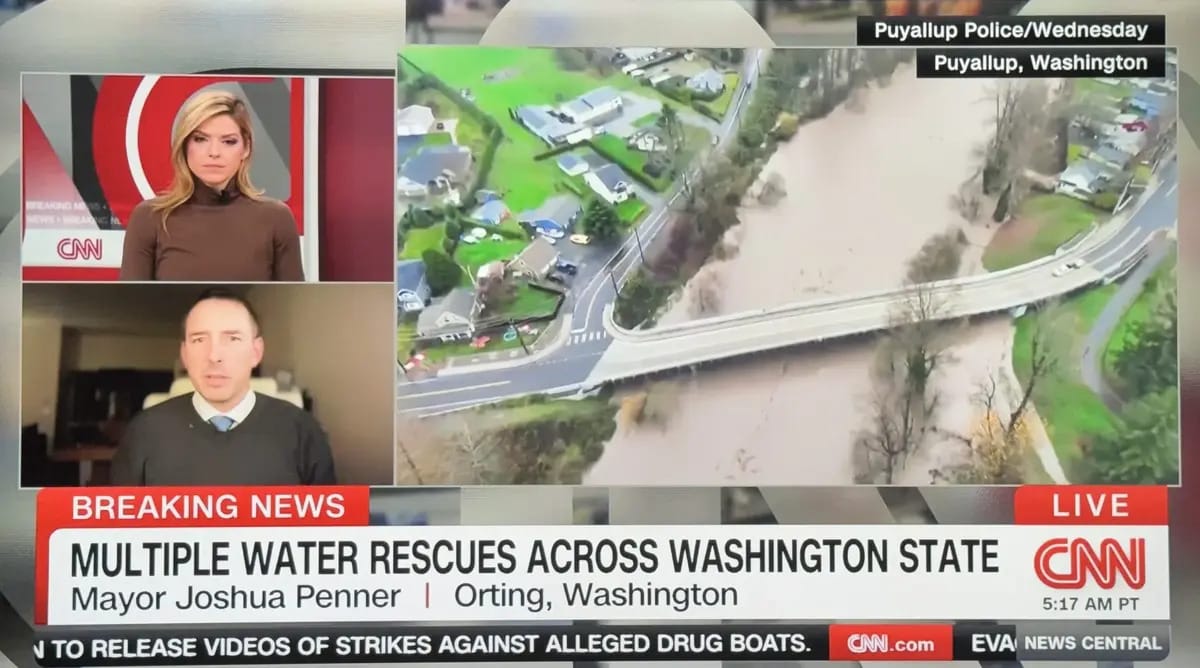
The Taxonomy of Crisis
To understand how the Chief Risk Officer mindset operates in real time, you must examine how mundane administrative issues can quickly collide with natural disasters, creating complex existential threats to the organization.
During my time as Mayor, we experienced an event that perfectly encapsulates this collision. The emergency did not start with a bang. It started with a seemingly benign administrative issue. A warning letter arrived from the Washington State Department of Ecology regarding the solid waste lagoon at our wastewater treatment plant.
A communication blind spot birthed this crisis. There was confusion about how information about the facility should flow through the organization. We debated whether reports should go through the board or directly to the executive team. A failure of information handoffs between legacy departments and executive leadership exacerbated the problem. Suddenly, a standard permit discussion escalated into a rat nest of imminent threats.
Staff prepared poorly bid proposals for a necessary dewatering process, and the bids failed. Departmental leadership handoffs felt clunky. The Department of Ecology issued confusing feedback. Sudden risk threatened our critical permits.
To compound the terror, this administrative nightmare collided with the weather. Meteorologists began tracking a historic atmospheric river barreling toward our city. If the wastewater solids lagoon overflowed during the flooding, the ecological, legal, and financial fallout would decimate the city.
A reactive leader panics in this scenario. A reactive leader scrambles and plays the blame game. The Chief Risk Officer earns their keep by refusing to panic. You fall back on your anticipatory framework.
Step one requires defining the core problem and the core success. The impending atmospheric river acted as the catalyst, but the actual crisis involved the risk of the lagoon overflowing and the permit failing. Success meant securing the facility, surviving the storm, and remaining in compliance.
Step two requires working backward from failure. My job as the executive did not involve crossing my fingers and hoping the failing plan magically worked out. I sat down with my team and assumed our primary dewatering bid had completely died. We needed secondary, tertiary, and quaternary options. We pivoted to a backup plan involving massive geotextile eco tubes to rapidly manage the waste.
Step three requires hunting for logistical failure points. Having a backup plan fails to solve the problem unless you relentlessly stress-test it. If the eco tubes provide the answer, what critical logistical failure points exist? We ran the matrix. Can we physically receive the massive tubes in time? Can the supplier deliver them on a weekend? Do we hold the free liquid capital to pay for them instantly? Do I need emergency authorization from the City Council now, or can it wait based on statutory emergency powers? At what precise moment do I formally declare a state of emergency? What risk tolerance does the Department of Ecology hold for this exact maneuver?
By going down a grueling checklist of anticipatory failures, we turned a terrifying compounding crisis into a series of manageable, solvable logistical hurdles. Sometimes, taking control of a crisis simply involves extending the timeline to buy yourself room to maneuver. We engaged the appropriate stakeholders and executed the contingency plan. The storm hit, the eco tubes worked, the facility held, and we entirely averted the crisis.
While natural disasters and state agencies present obvious threats, internal risks often serve as the silent killers of executive careers.
You must assume that your City Administrator will resign unexpectedly at some point. A key staff member will require a firing that triggers a lawsuit. A toxic personality will fracture your board. If you do not anticipate these internal organizational risks, they will devastate your administration just as thoroughly as a flood.
Too many executives view internal friction as a personal betrayal or a shocking anomaly. A Chief Risk Officer views internal friction as an inevitability. Your board will fracture at some point. Someone will retire, voters will elect a toxic candidate, or a trusted council member will go through a bitter personal divorce that bleeds into their public behavior.
As a risk manager, you build the resilience of information systems to survive these internal shocks. You do not hoard data like a tyrant. You democratize the workflow, so the institutional knowledge remains intact if a key player vanishes. You work with your team and your board to solve unseen hypothetical crises during peacetime. You persuade people to sign subconscious contracts of assent.
When you execute this strategy, your organizational structure holds firm when the board fractures or the lawsuit lands. The situation does not catch you off guard. You know where the votes reside, you understand the sentiment, and you intentionally choose which risks to take and which battles to fight.
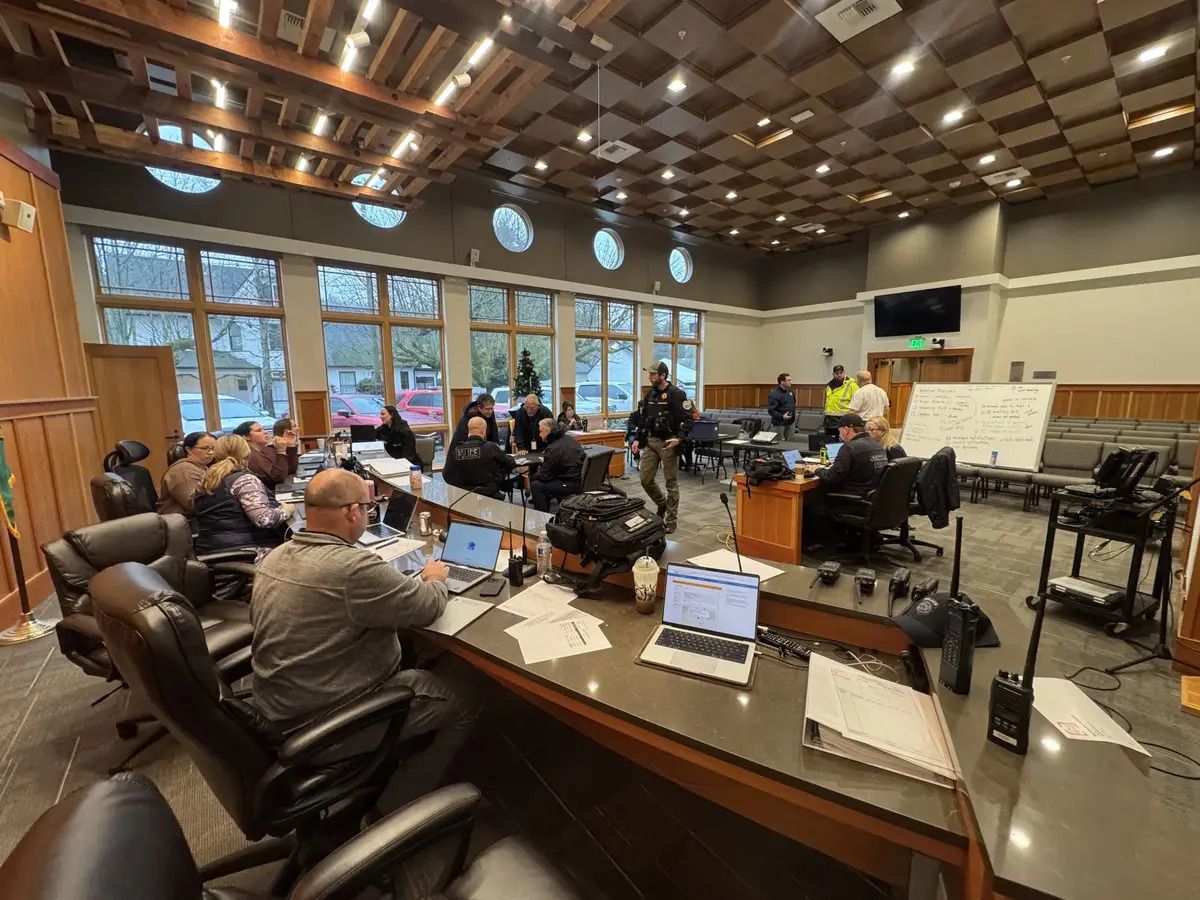
Your Crisis Blueprint
Sometimes, despite your best anticipatory efforts, an acute unmitigated crisis strikes. Wildfires surround your city limits. A highway washes out. A global pandemic shuts down your local economy overnight.
A lack of adequate tools, resources, and normal operating procedures to address an immediate threat defines a crisis. When the surprise phase hits, your immediate reaction determines whether your organization survives. Every crisis shares a similar blueprint. You face the surprise, you collect the pieces, you engage a plan, and you delegate.
My seven-year-old daughter possesses a brilliant mathematical mind. She easily handles complex basic algebra. I once watched her solve a massive triple-digit math problem entirely in her head. When I asked her for her method, she gave me a roundabout explanation. She visually grouped the numbers, pulled them apart, solved the small chunks, and seamlessly put them back together. Then she looked at me, made a fart noise, laughed, and ran away. Impish behavior aside, her mathematical approach perfectly illustrates crisis management.
As a public sector executive facing a massive disaster, you must emulate my daughter's strategy. You must break the massive crisis down into its constituent variables. Understand the parts that matter, and re-construct the problem in a solvable way.
When the atmospheric rivers hit Orting, water overtopped the levees on the west and northwest portions of the city. The immediate terrifying visual threat manifested as the water. As the Incident Commander, I knew that heavy rain did not constitute the crisis. The flood itself did not constitute the crisis. The water simply acted as the catalyst.
The variables are the rain, the state of the levee, the response, and so forth. But the true crisis is the massively increased potential that someone could die who did not need to die. Loss of life represented the ultimate organizational and moral failure. THAT’s the crisis, not the flooding, the elevated risk. The elevated risk is the problem to be solved.
Once you define the problem. The elevated risk. The ultimate failure. You work backward. What must fail for a resident to die in this flood? The warning systems must fail. Why would they fail? Perhaps we failed to send the police door-to-door. Perhaps a resident is deaf and cannot hear the siren. Perhaps a resident lacks vision. Perhaps parents left a child home alone while working.
When you break the crisis down, you realize you cannot stop the rain, but you can control the variables.
You cannot fight the river, but you can fix the warning system. You can clear the evacuation routes.
You can deploy targeted teams to the homes of the vulnerable. You stop playing whack-a-mole with the immediate visual stimuli and start systematically mitigating the points of failure that lead to loss of life.
You step back and think systemically. You use frameworks such as PESTEL or a basic SWOT analysis to map the logistical critical paths.
In the middle of a crisis, you must avoid trying to manage tactical operations. As the executive, you act as the Incident Commander of your organization's vision. You cannot fill the sandbags, nor can you micromanage the people filling them.
You must delegate. Sometimes, you must delegate the act of delegation to an operational lead.
Your job requires overseeing logistics, securing resources, managing public messaging, and planning for the future. While your public works director fights the flood today, you must assume the crisis will eventually end. What will the organization look like in three days, once the water recedes? How will the city continue functioning? The whack-a-mole leader focuses entirely on the water.
The anticipatory leader focuses on the city (or the organization’s) survival and recovery.
Tactical Media Relations
One of the most fascinating aspects of my conversation with Soo Ing-Moody involved how a Chief Risk Officer adapts to the media during catastrophic natural disasters. In 2014, Soo served as the Mayor of Twisp when the Carlton Complex wildfires devastated the region.
She faced an apocalyptic scenario. Telecommunications failed, power grids collapsed, and the highway literally washed into the river, taking an entire house downriver with it. Rockslides and walls of flame changed evacuation routes by the hour. A flash rain event hit the compromised soils, causing even more destruction. Amidst this chaos, national and regional media reporters lost cell service and began physically knocking on her door.
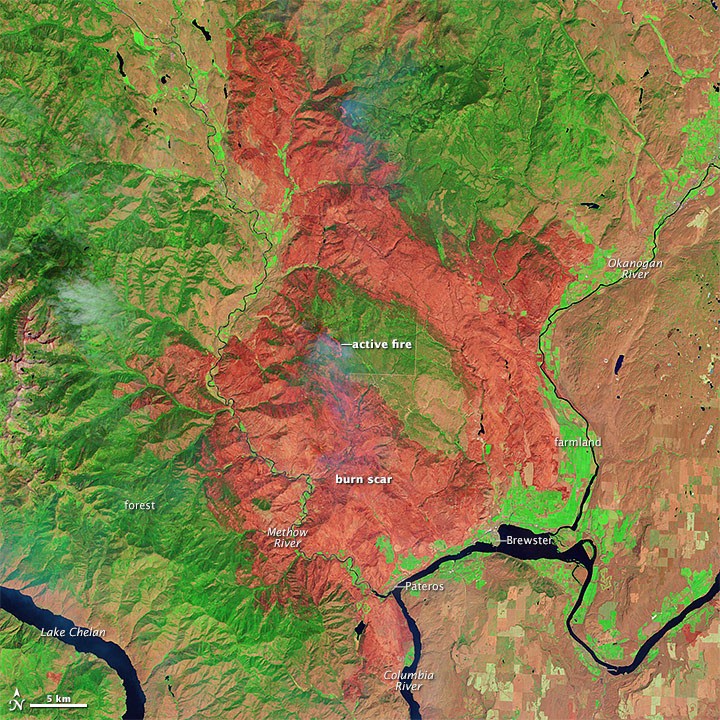
Soo did not view the media as a nuisance. Instead, she executed pure operational triage. In a small town with no full-time Public Information Officer and a completely destroyed communications grid, national reporters broadcasting to the outside world could not help her isolated citizens. She vigorously protected her time. She strategically chose to engage only with the local radio station in Chelan. That station could immediately broadcast accurate, life-saving evacuation levels to the people who needed them most.
Through repeated disasters, Soo came to fully embrace the media as a vital risk-management tool. This shift included the tragic Twisp River fire in 2015. During that event, three firefighters lost their lives, but the power grid remained intact, allowing her to communicate differently. As she noted, effective media use requires knowing exactly which outlet to use, what to share, and when to share it. In her words, the media acts a lot like a chainsaw. A skilled risk manager wields it with incredible power. However, it remains unwieldy at best and, if you fail to respect it, creates a dangerous, bloody mess at worst.
I experienced a different side of this dynamic during the Orting floods. When the river began overtopping the levee, we issued a highly targeted, mandatory Level 3 evacuation for a specific section of the city. We executed a preparatory Level 2 evacuation warning for the surrounding areas.

Because we took decisive action, the news media immediately caught wind. Soon, national reporters flooded my phone. CNN and MSNBC demanded interviews. The media desperately wanted to push a national narrative that claimed our city was completely underwater.
The media frenzy felt slightly ridiculous to me. The reality appeared far less dramatic. Over the previous decade, we invested heavily in flood infrastructure, levee setbacks, and emergency planning. Residents remained safe. The real story proved that local government competence worked exactly as designed. The old journalism adage reigns supreme. If it bleeds, it leads. The media wanted a disaster.
As a Chief Risk Officer, you do not ignore the media, but you also refuse to let them dictate the narrative. During a crisis, public panic introduces a massive, highly contagious risk factor. The media holds a contract with its audience to provide compelling programming and generate ratings. You hold a contract with your citizens to provide accurate, calming, and actionable information to keep them safe.
You must view the media as a free, high-wattage platform for executing your contract. When a reporter asks you a sensationalized, panic-inducing question, you completely ignore the premise. You answer the question you want to answer. You look at the camera and state the facts clearly. You explain that residents in the specific danger zone understand the evacuation orders. You assure the public that the infrastructure holds steady. You praise emergency responders for flawlessly executing pre-planned protocols. You direct residents to the city website for guidance.
The media holds a contract with its audience to provide compelling programming and generate ratings. You hold a contract with your citizens to provide accurate, calming, and actionable information to keep them safe.
You use their satellite trucks and airtime to broadcast your executive vision. You issue clear instructions to your residents. You mitigate panic. You demonstrate total unshakeable competence. You use the reporters just as much as they use you. You preemptively employ the media as just another tool in your risk mitigation arsenal.
Breaking the Cycle of Surprise
At some point in every leader's journey, they must decide what kind of executive they want to become. You can choose to play the reactive whack-a-mole manager who lurches from crisis to crisis. That path leaves you exhausted, paranoid, and perpetually caught off guard. Alternatively, you can choose to become the executive who confidently commands the room. You can build a culture of team members who feel utterly capable of solving any problem thrown their way.
The people who work for the anticipatory leader take less pay, work longer hours, and rave about their organization. The people who work for the reactive leader update their resumes during their lunch breaks.
When you find yourself reacting to a surprise, your immediate goal must be to figure out how to mitigate the next one. If you merely move from one unexpected disaster to another, you remain trapped in a reactive loop. You must implement strategies like the military concept of the OODA Loop. You observe, orient, decide, and act to rapidly process and respond to chaos.
An OODA loop only provides a tactical response mechanism. You never truly break the cycle of surprises until you become a master practitioner of pre-visioning and the pre-mortem.
The title on your office door might say Mayor, City Administrator, Executive Director, or Department Head. The plaque might imply that you act as the chief visionary or the master policymaker. The reality of your day-to-day existence demands an entirely different skill set.
Your job requires you to look at the horizon, identify the storms that no one else sees, and build the shelter before the first drop of rain falls.
You serve as the architect of your organization's resilience. You stand as the shield against the unforeseen. Ribbon-cutting ceremonies rarely define your legacy. The disasters that never happen define your true success.
You are a Chief Risk Officer. Own the title, apply the lens, and watch the unmanageable chaos of executive leadership finally bend to your will.
Was this article helpful for you in your role?

